
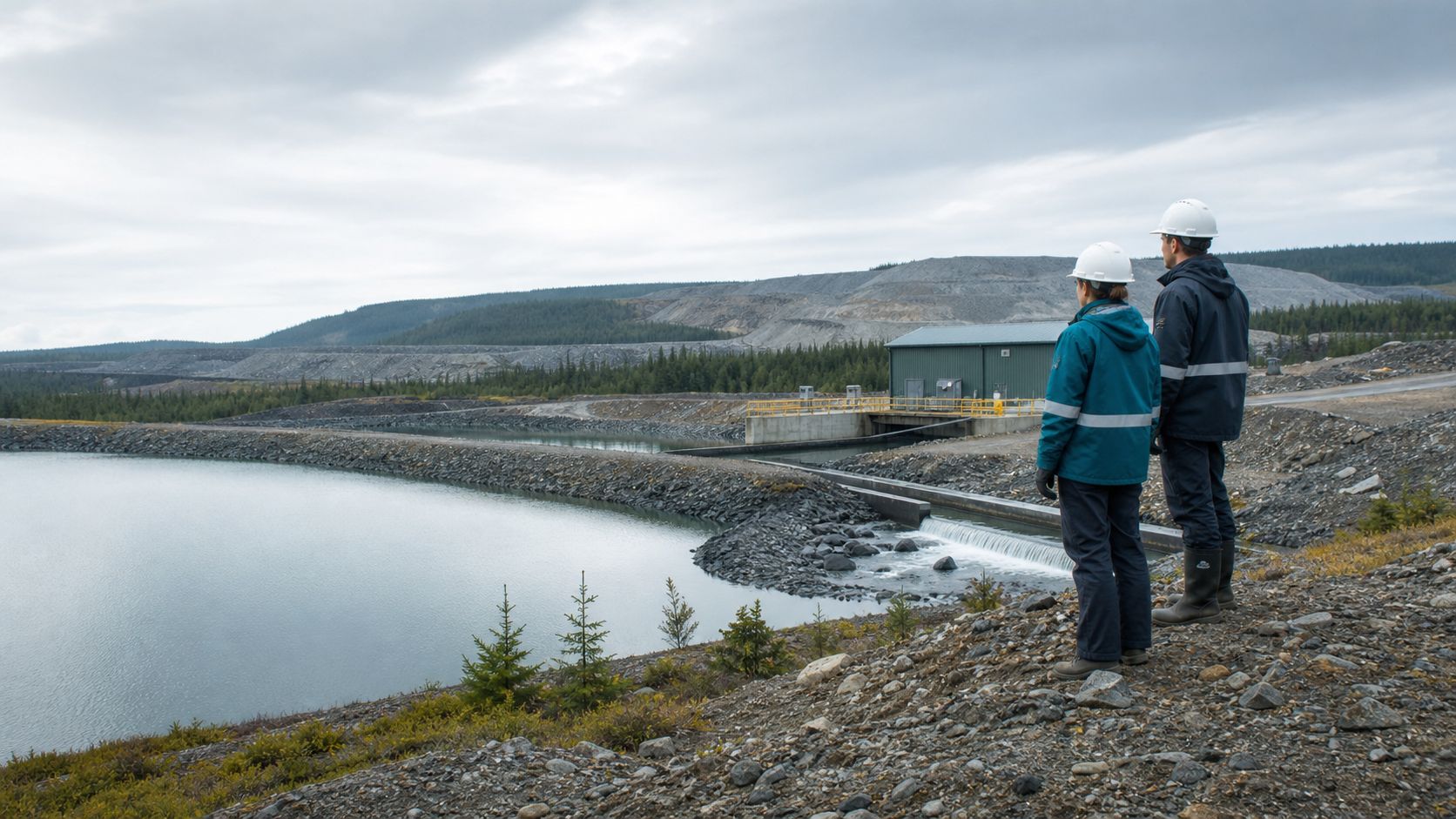
Mine closure does not begin when production ends. The decisions made during operations—how water is separated, stored, treated, redirected, and managed around waste rock and tailings—shape the practical obligations a site carries into closure and post-closure.
For mine operators, that makes water management a core closure-planning issue, not a final-stage task. As a site transitions, water volumes, flow paths, treatment demands, infrastructure needs, and the composition of wastewater can all change. A plan that worked during active production may not be the right long-term solution once the mine, mill, or dewatering system changes.
The goal is to leave a closure-ready water-management system: one that reflects the site’s actual conditions, supports responsible stewardship, and gives decision-makers a clear basis for managing long-term environmental liability.
Why mine closure water management starts during operations
Operating teams have the strongest access to site knowledge: how water moves through the property, where clean and contact water are separated, how treatment systems perform, what infrastructure is essential, and where seasonal or remote-access constraints affect work.
That knowledge is invaluable for closure planning. The federal Environmental Code of Practice for Metal Mines recommends reviewing and revising closure plans throughout the mine life cycle. It also identifies water and waste-management facilities, waste rock piles, and tailings management facilities as components that closure planning should address.
Early planning gives a project time to test assumptions, complete progressive work where appropriate, and avoid leaving high-consequence decisions to the final years of operations.
1. Understand how the site water balance will change
A mine’s water balance is not static. Production, ore processing, pumping, water recycling, tailings deposition, and surface-water controls can all influence it. During closure, some of those drivers may disappear while others become more important.
A practical review asks:
– Which water sources will remain after operations end?
– How will runoff, seepage, pit water, groundwater interaction, and seasonal conditions affect future flows?
– Which water will remain clean and can be diverted away from affected areas?
– Which water may need containment, treatment, or controlled discharge?
– How could extreme precipitation, snowmelt, permafrost conditions, or changing drainage patterns affect the plan?
This is where closure planning becomes site-specific. The right approach depends on the property’s hydrology, mine workings, waste-rock and tailings facilities, treatment needs, climate, and intended post-closure land use.
2. Plan clean-water diversion and contact-water management together
Separating clean water from water that has contacted mine infrastructure or mine waste can reduce the volume requiring treatment and make the overall system easier to manage.
The federal mine code identifies water-management measures such as diversions and drainage ditches that keep off-site water from entering mine areas and help prevent contaminated water from leaving a site before treatment. At closure, operators should reassess whether existing structures remain necessary, need modification, or can be safely decommissioned.
The plan should be practical on the ground. It needs to account for access, maintenance requirements, seasonal flow changes, and who will be responsible for long-term controls.
3. Treat wastewater treatment as a closure decision
Water treatment can remain a significant responsibility after active mining ends. A long-term treatment plan should consider the expected wastewater volume and composition, the treatment process, operational needs, the reliability of supporting infrastructure, and how treatment residuals or sludge will be managed.
Treatment planning is not only about equipment. It is about the full operating model: supplies, energy, trained personnel, access, contingency arrangements, waste handling, documentation, and the financial implications of continuing care.
For remote and northern sites, the logistics deserve early attention. Seasonal access, winter conditions, freight timing, staffing, and availability of materials can all influence how a treatment strategy performs in practice.
4. Connect water decisions to waste rock and tailings management
Water management, waste rock, and tailings are connected systems. Waste rock and tailings can affect seepage, drainage, and the long-term need for containment or treatment. Conversely, closure covers, drainage controls, landform design, and progressive reclamation can influence where water goes and how much water requires management.
The federal code recommends considering the risks of metal leaching and acidic drainage in the design and management of waste-rock piles and tailings facilities. It identifies a range of site-specific prevention or control measures, including limiting infiltration, segregation, covers, and other methods suited to the material and setting.
The essential question is not whether one standard solution can be applied everywhere. It is whether the closure plan connects the physical management of mine waste with a workable long-term water strategy.
5. Decide which water-management structures stay, change, or go
As operations wind down, dams, diversion ditches, ponds, spillways, culverts, pipelines, and treatment components may have different roles than they did during production.
A closure-ready plan should identify:
– structures that are no longer needed and how they will be decommissioned;
– structures that remain necessary and their long-term maintenance needs;
– structures that need modification to suit closure conditions; and
– the sequence, responsibilities, and documentation needed to complete the work safely.
This is a valuable opportunity to reduce complexity where it is appropriate, while retaining the controls that protect people, water, and the surrounding environment.
Where KBL fits
KBL Environmental brings field execution and technical advisory services together to help clients manage complex environmental responsibilities across the mining life cycle. For closure-focused projects, that can include practical water-management and treatment planning, mine-waste and environmental-liability considerations, permitting and regulatory documentation, environmental management plans, and field support in remote and northern operating environments.
The value is in connecting the plan to the work. A closure water-management strategy needs to be technically sound, but it also needs to be realistic about access, logistics, sequencing, waste handling, and the long-term responsibilities that follow.
The bottom line
Mine closure water management is built during operations. By reviewing future water balances, treatment needs, water controls, waste-rock and tailings interactions, and infrastructure decisions early, operators can reduce uncertainty and make more informed closure choices.
The result is a clearer path toward responsible stewardship, stronger environmental liability management, and a closure plan that is ready for real site conditions.
FAQ
Q: Why should mine closure water management be planned during operations?
A: Operations provide the best opportunity to understand site water flows, treatment needs, infrastructure, waste-management conditions, and logistical constraints. Using that knowledge early supports more practical closure decisions.
Q: What should a mine closure water-management plan address?
A: It should address future water sources and flows, clean-water diversion, contact-water containment, treatment needs, water-management structures, waste-rock and tailings interactions, access, responsibilities, and long-term care requirements.
Q: Can mine water treatment continue after closure?
A: It can be required where site conditions indicate a continuing need. A long-term treatment plan should consider expected wastewater volume and composition, operations, supplies, staffing, access, treatment residuals, and contingency arrangements.
Q: How do waste rock and tailings affect closure water management?
A: They can influence seepage, drainage, metal leaching, acidic drainage risk, and the future need for water controls or treatment. Closure planning should connect mine-waste management with the site’s water strategy.
Q: What is the role of clean-water diversion?
A: Diverting clean runoff away from affected areas can reduce the amount of water requiring management or treatment. The approach must be designed and maintained for site-specific conditions and approvals.
Q: How do remote locations change closure water-management planning?
A: Remote sites need added consideration of weather, seasonal access, staffing, freight, materials, equipment reliability, communications, and long-term maintenance responsibilities.
CTA
Planning for closure water management, treatment, or long-term environmental liability? KBL Environmental can help connect practical field execution with technical planning across mine operations, closure, reclamation, and post-closure. Talk with our team about a project-specific water-management strategy built for your site, approvals, and operating environment.